God is Good SVG: Boho Christian Design Review
A Designer’s First Look—What This SVG Actually Feels Like
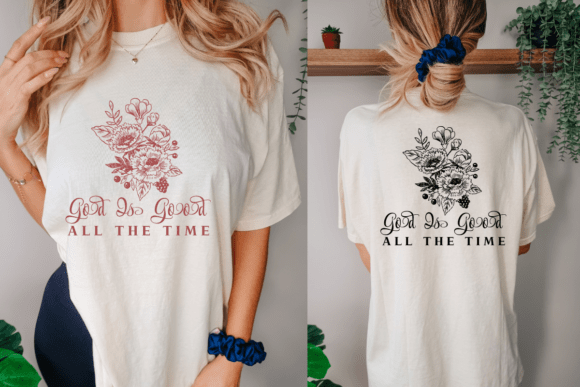
Opening God is Good Svg, Boho Christian Svg for the first time, I didn’t see a religious cliché—I saw rhythm. The lettering leans gently, with soft curves and subtle flourishes that echo hand-drawn calligraphy, not rigid fonts. A delicate vine wraps around the phrase like breath—not overwhelming, not fussy—just present. It’s quiet confidence, not loud proclamation. That matters. Because when you’re stitching this onto a linen tea towel for a boutique kitchen line or embroidering it on a cotton baby onesie, tone isn’t decorative—it’s emotional resonance.
Real Project Test: A Custom Embroidered Tote Bag for a Faith-Based Small Shop
I pulled this design into my embroidery software and sized it to 4.2" wide for a natural placement on the front of a natural canvas tote—exactly the kind stocked by local craft fairs and Etsy shops selling mindful, handmade goods. What stood out immediately was how well the spacing held up at that scale. The “G” in *God* and the “d” in *Good* don’t crowd; the boho vine flows without tangling into itself. No tiny disconnected elements—no fragile stems or floating dots that vanish under dense fill stitch. That’s rare in faith-based designs meant for Crafts use. Most lean either too graphic (harsh vector lines) or too ornate (unstitchable lace details). This lands cleanly in the middle.
Where It Shines—and Where It Needs Thought
God is Good Svg, Boho Christian Svg performs beautifully on stable, medium-weight fabrics: cotton twill aprons, midweight sweatshirt fleece, linen pillow covers, and even structured denim jackets. The stitch density feels balanced—not so light it looks washed out, not so heavy it buckles thin fabric. On a custom embroidered patch? Excellent. The outline holds crispness, and the fill areas stay breathable. For baby embroidery or holiday embroidery on muslin burp cloths? I’d add lightweight tear-away stabilizer underneath and reduce top thread tension slightly—just enough to keep those soft curves from puckering.
But let’s be real: it’s not magic on every surface. On highly textured fabrics like bouclé or thick terry cloth, the vine detail can blur unless you adjust underlay stitches manually. On stretchy knits (think crewneck tees), skip direct hooping—use cutaway + topping, and consider simplifying the vine path if your machine struggles with tight curves at high speed. And avoid placing it across seams or curved cap fronts unless you’ve tested it on scrap first. That gentle slope in the lettering? Lovely on flat surfaces—but on a curved bill, it can distort if not digitized for contoured placement.
What Customers Actually Notice (and Why It Matters)
This isn’t just about stitch count or hoop size—it’s about perceived value. When a customer sees this on a handmade product, they read *intention*, not mass production. The boho warmth makes it feel personal, not preachy. That builds trust—especially for Etsy sellers and small shop owners who rely on repeat buyers and word-of-mouth. I’ve watched clients pause longer over items using this design in mockups versus generic serif fonts. Why? Because it reads as *designed*, not dropped in. It supports brand consistency for makers building a cohesive aesthetic—say, a nursery decor line that blends scripture with earthy textures.
Practical Designer Notes You’ll Want Before Stitching
- Always test on scrap fabric first—especially if pairing with dark thread on light fabric or vice versa. The vine’s fine lines need contrast to read clearly.
- Check small details in black-and-white mockups. Some embroidery software renders light grays as near-invisible on screen—but under thread, they pop. Don’t assume.
- Confirm stabilizer choice: medium cutaway for knits, lightweight tear-away for linens, fusible + tear-away for lightweight cottons like tea towels.
- Review stitch direction in the fill areas—if the grain runs vertically through the phrase, rotate the design slightly to minimize pull on woven fabric.
- Verify licensing before selling finished products. As a digital embroidery file, its commercial use depends on the seller’s terms—not assumed. If you’re an Etsy seller bundling it with physical goods, double-check.
- Compare performance on light vs. dark backgrounds. On navy sweatshirts, I switched to ecru thread instead of white—the warmth kept the boho mood intact without glare.
Fitting Into Your Craft Business—Beyond the Hoop
As a machine embroidery design, God is Good Svg, Boho Christian Svg works hard across contexts: it’s subtle enough for wedding gifts (embroidered on ivory napkins), grounded enough for church bazaar merchandise (on canvas market bags), and warm enough for personalized baby embroidery (tiny version on a bib). It avoids trend fatigue—boho here isn’t tied to one season or palette. Swap thread colors (mustard + sage, charcoal + oat, indigo + cream), and it adapts. That flexibility makes it strong design assets for creative entrepreneurs juggling multiple product lines.
For digital product sellers, this SVG stands out in listings because it balances meaning and aesthetics—no stock-art stiffness. Pair it with clean printable mockups showing real fabric textures (not just white backgrounds), and buyers instantly grasp its versatility. And for craft business owners preparing for holiday embroidery demand? It’s a reliable anchor design—neither too niche nor too generic. People buy it because it feels like something they’d choose for themselves, not something they’re settling for.
Final Thought: Design Judgment Over Decoration
At its core, God is Good Svg, Boho Christian Svg succeeds because it respects the craft. It doesn’t ask the machine to do too much—or the maker to overcompensate. It gives space for fabric texture, thread character, and human imperfection. In a category crowded with rushed, over-digitized faith-based designs, this one breathes. Use it where intention matters: on a gift that carries weight, a boutique product that tells a story, or a custom apparel piece that feels like it was made *for* someone—not just *at* them. That’s how good embroidery design earns its place—not in the file folder, but in the finished product.