Vintage Antique Cross Christian Art SVG
First Impression: A Quiet, Reverent Presence
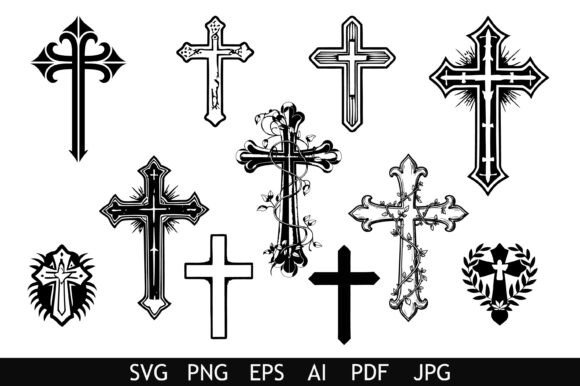
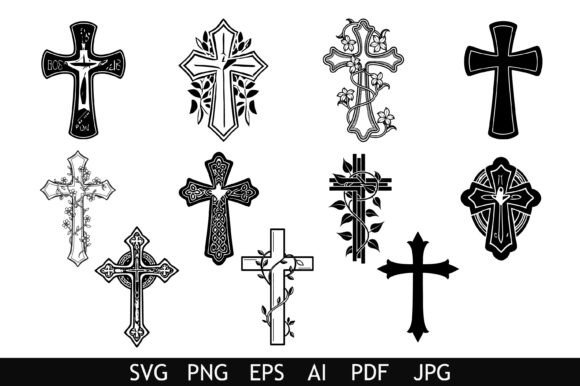
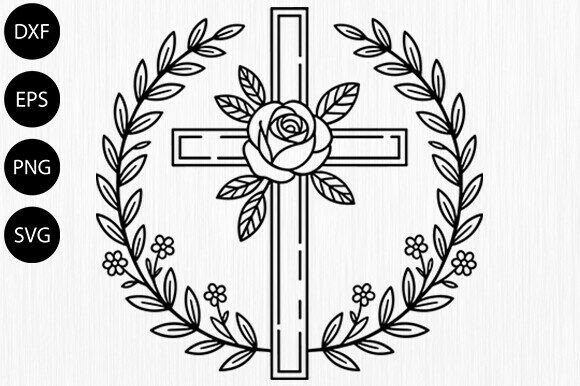
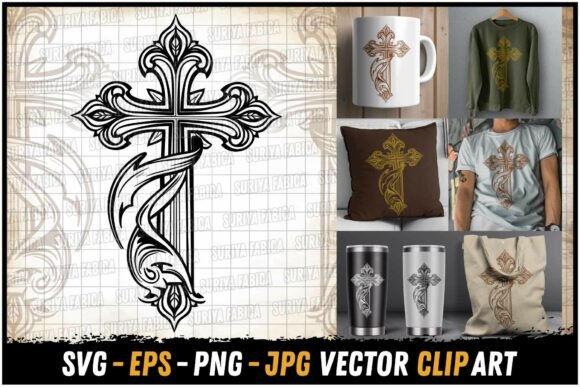
Opening Vintage Antique Cross Christian Art SVG feels like unfolding a well-loved hymnal—delicate line work, subtle asymmetry, and a soft, hand-drawn weight that avoids rigid perfection. It’s not flashy or modern-minimalist; it leans into aged authenticity with gentle flourishes: faint scrollwork at the cross arms, a softly tapered vertical beam, and a base that suggests weathered stone rather than sharp geometry. The design breathes. That matters—especially when translating to stitch. I immediately pictured it on a linen tea towel for a church bazaar, or centered on a cream cotton baby blanket. It doesn’t shout. It invites pause.
Where It Lives Best: Thoughtful, Textured, Intentional Projects
This isn’t a design for high-contrast streetwear or bold festival merch. Vintage Antique Cross Christian Art SVG thrives where craftsmanship and quiet meaning intersect. I tested it as a machine embroidery design on a heavyweight organic cotton tote bag—no applique, just clean satin and fill stitch—and the result was warm, grounded, and unmistakably handmade. It also translated beautifully onto a brushed cotton apron for a local bakery’s Easter collection: the slight irregularity in the lines echoed the artisanal feel of their sourdough packaging.
For Etsy sellers and small shop owners, this is a strong candidate for curated holiday embroidery: think embroidered pillow covers for a faith-based home goods line, or delicate cross patches sewn onto denim jackets for a boutique’s spring launch. It works especially well for personalized gifts—adding a name or date in a simple serif font beneath the cross (as a separate embroidery file) keeps the focus reverent without overcrowding. As a sweatshirt embroidery piece, it holds up best on mid-weight fleece or French terry—not ultra-thin jersey—where the stitch density supports its fine contours without puckering.
Real-World Stitching Notes You’ll Actually Use
- Stabilizer is non-negotiable. Even on stable fabrics, the fine outer lines and open negative space need medium tear-away or cut-away to prevent distortion—especially around the upper curve of the crossbeam.
- Thread color contrast makes or breaks it. On dark fabric, avoid pale ecru or ivory thread—it disappears. Go for charcoal grey or deep olive instead. On light fabric, navy or burgundy reads richer than black, enhancing the antique mood.
- Hoop size matters more than you’d expect. The design fits comfortably in a 4x4 hoop, but if your machine allows, use a 5x7 for smoother satin stitch transitions on the outer edges. Don’t force it into a 3x3 unless you’re willing to simplify details manually.
- Test on scrap fabric first—twice. Once with your intended stabilizer and thread, then again with a slightly denser fill stitch setting. Some versions of this design have tight internal corners that can look “busy” if over-stitched.
Use With Care: Where the Design Asks for Extra Attention
Vintage Antique Cross Christian Art SVG isn’t ideal for every surface. Avoid it on highly stretchy knits (like lightweight ribbed baby onesies) without significant digitizing tweaks—the fine lines can distort during wear and wash. Curved surfaces like cap fronts require careful placement and possibly reduced stitch density to keep the proportions legible. And while it’s lovely on textured fabrics like burlap or heavy linen, skip it on ultra-thin voile or chiffon: the detail gets lost, and stabilizer show-through becomes distracting.
Also worth noting: the design relies on clarity of form, not dense coverage. That means it’s not built for heavy-duty outdoor gear or items meant for frequent industrial laundering—think kitchen towels versus restaurant aprons. For baby embroidery, confirm your thread and stabilizer are Oeko-Tex certified before stitching directly onto garments.
What It Adds to Your Finished Product—Beyond the Obvious
Using Vintage Antique Cross Christian Art SVG elevates perceived value—not because it’s complex, but because it signals intention. Customers notice the difference between a generic cross icon and one that feels touched by time and care. For craft business owners, that translates to stronger brand consistency across product lines: a matching cross on a candle label, a tea towel, and a greeting card feels cohesive, not repetitive.
It also builds trust. When buyers see this kind of thoughtful design execution on an embroidered patch or personalized gift, they read “this maker pays attention.” That matters for Etsy sellers competing in saturated categories—faith-based crafts, nursery decor, or holiday embroidery—where emotional resonance often wins over novelty.
Practical Designer Checks Before You Stitch or Sell
- Verify licensing: Is Vintage Antique Cross Christian Art SVG cleared for commercial embroidery use? If you’re selling finished products (tote bags, patches, apparel), confirm the license permits that—not just personal use.
- Check stitch density in your embroidery software. If it’s above 12,000 stitches, consider simplifying small inner scrolls for better performance on mid-range machines.
- Preview in black-and-white mockups. Does the silhouette hold up? Does it read clearly at 3 inches wide on a digital listing thumbnail?
- Compare how it looks on both light and dark fabric backgrounds using your usual printable mockup templates—this helps set accurate customer expectations.
- Ask yourself: does this support your brand voice? If your shop leans modern-sleek, this may feel tonally mismatched. But if you specialize in heirloom-quality handmade product or slow-craft aesthetics, it’s a natural fit.
A Design That Earns Its Place
Vintage Antique Cross Christian Art SVG won’t dominate a trend report—but it will quietly strengthen your next embroidery project. It’s the kind of design that earns repeat use: on a baptismal blanket, stitched into a pastor’s pocket square, or framed as a small embroidered wall hanging for a counseling office. It respects the material, the machine, and the meaning behind the motif. For designers, Etsy sellers, and craft business owners who value authenticity over algorithm-chasing, this is less of a “file” and more of a reliable collaborator—one that reminds us why we choose embroidery in the first place: to make something that lasts, and speaks softly, for years.